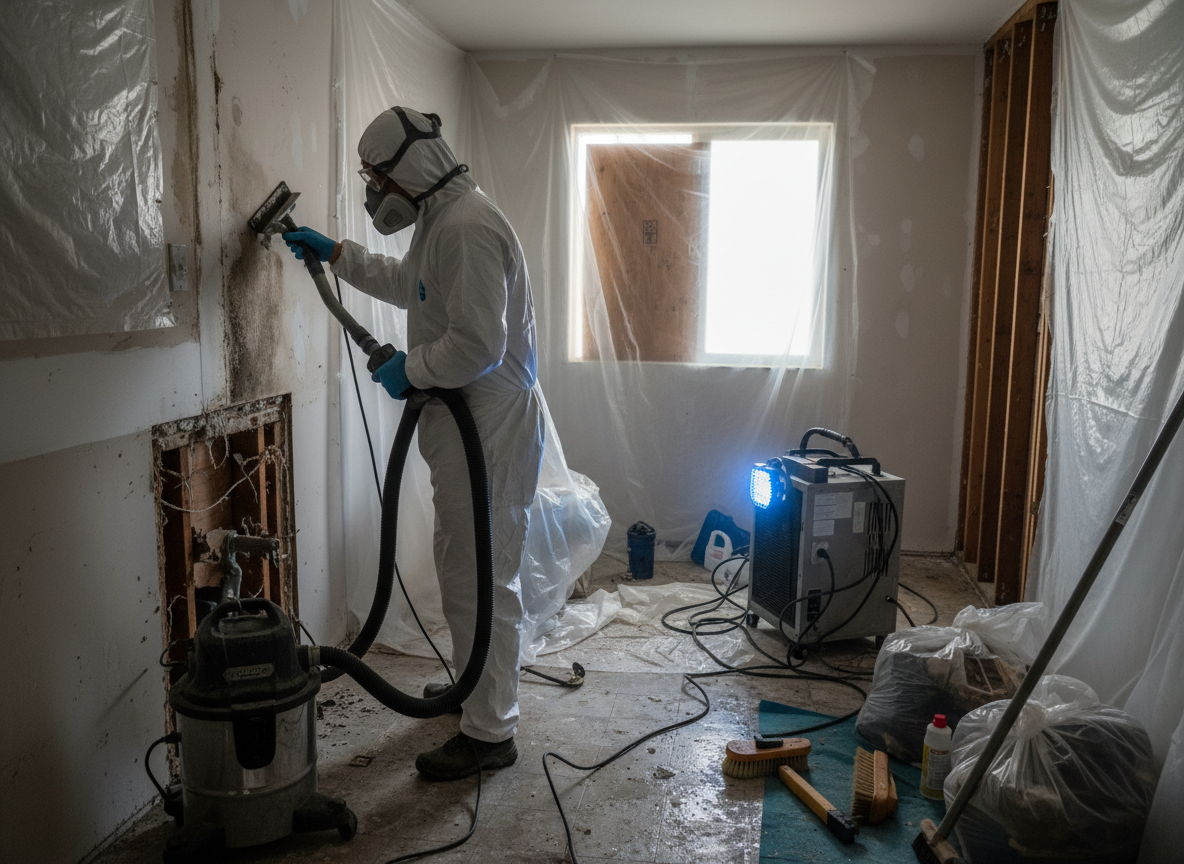
Solana Beach homes in Lomas Santa Fe and along the Solana Beach Coastal Rail Trail often see mold growth triggered by the mild coastal Mediterranean climate where ocean moisture lingers year-round. Older single-story ranch houses and split-levels common in Solana Highlands trap humidity in crawl spaces and behind stucco, especially near San Elijo Lagoon where ground saturation stays high. A 24 hour mold removal call here usually starts with hidden growth in HVAC ducts or under bathroom subfloors rather than obvious wall stains.
Encinitas and Del Mar properties share similar terrain and water table issues, so crews moving between these cities carry extra containment barriers and negative-air machines sized for the salt-laden air that speeds up drywall breakdown. In Carlsbad homes the same distance inland the work differs because those structures sit on drier slopes, but Solana Beach jobs frequently require extra drying time after extraction because fog rolls in nightly. Technicians check under kitchen sinks and laundry areas first because those spots sit against exterior walls facing prevailing winds.
Code requirements in San Diego County push for full source removal instead of encapsulation alone, and any job touching shared walls in Downtown Solana Beach townhomes needs extra neighbor notification steps. Homeowners often overlook the way Fletcher Cove Park microclimate keeps outdoor humidity elevated even on sunny days, feeding indoor growth through open windows and patio doors. Proper 24 hour mold removal here means pulling baseboards and checking insulation rather than surface wiping that leaves roots behind.
Technician insight
In Solana Beach the thing that catches most people out with 24 hour mold removal is how the constant ocean breeze pushes moisture under stucco-clad homes built in the 1970s and 80s in Solana Highlands, so what looks like a small bathroom spot often turns into full underfloor work once you pull the subfloor near the San Elijo Lagoon side of town.
Hidden Growth Under Laundry Room
A homeowner in Downtown Solana Beach noticed a musty smell after heavy winter fog. Inspection found mold on the underside of the laundry platform and into the adjacent wall cavity where ocean air had entered through a vent. Crew contained the room, removed the platform and insulation, treated the framing, and dried the space over two days before reinstalling finished surfaces.
How it works
- 1
Initial Assessment
Technician arrives within hours, maps moisture with meters, and identifies affected zones in crawl spaces or attics common to Solana Beach construction.
- 2
Containment Setup
Plastic barriers and negative air machines isolate the work area to prevent spores from reaching unaffected rooms in the typical open floor plans found locally.
- 3
Removal and Cleaning
Affected materials are cut out, surfaces treated, and HVAC components cleaned when mold has traveled through ducts exposed to coastal humidity.
- 4
Drying and Verification
Industrial dehumidifiers run until readings drop, followed by post-remediation testing before barriers come down.
Pricing
Cost depends on square footage affected, whether HVAC cleaning is required, and access to crawl spaces typical in Solana Beach homes.