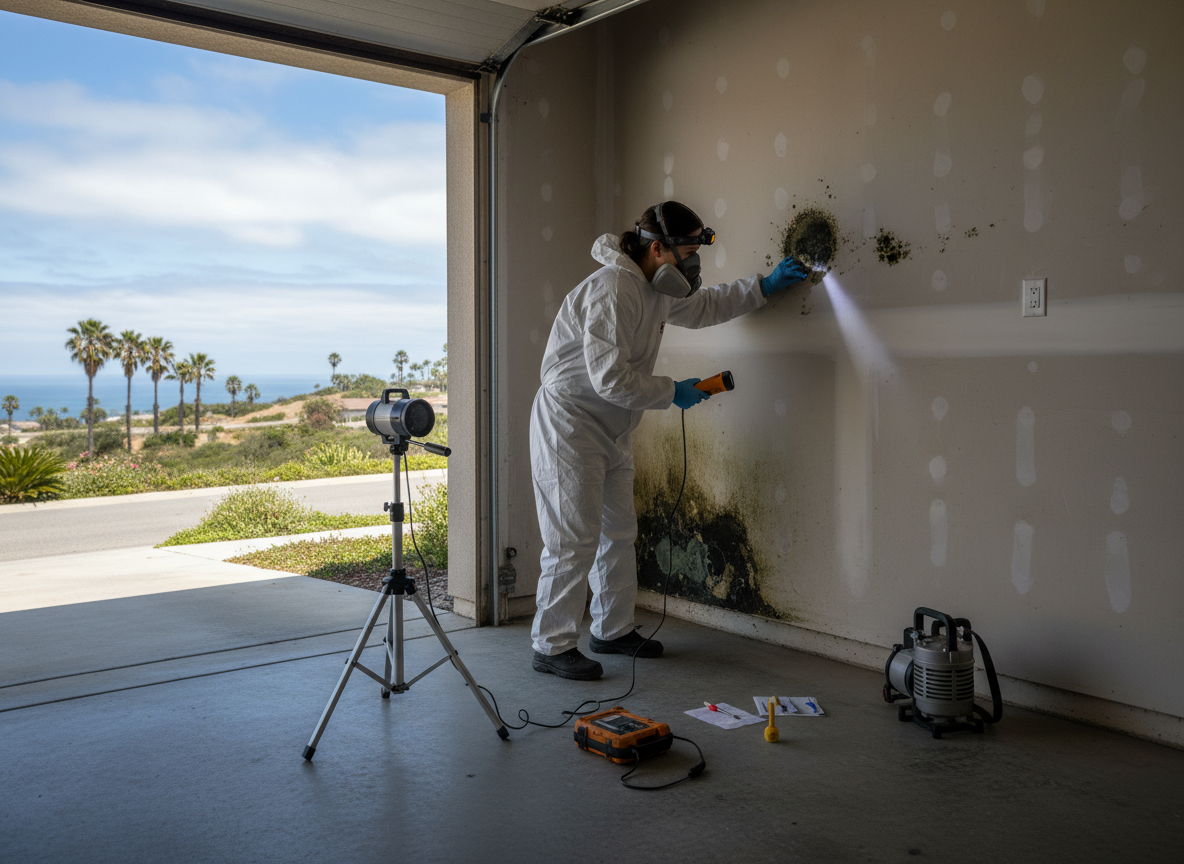
Black mold inspection in Solana Beach homes often starts with checking crawlspaces and attics where the mild coastal Mediterranean climate keeps humidity elevated year-round. Ocean air moving through neighborhoods like Lomas Santa Fe and Solana Highlands can drive moisture into older wood-framed houses built before modern vapor barriers became standard. Inspectors map temperature differentials and look for condensation on pipes or underfloor insulation that homeowners rarely notice until odors appear.
San Diego County building practices in the 1970s and 1980s left many properties in Downtown Solana Beach with single-pane windows and minimal roof ventilation. These details let salt-laden air from the nearby San Elijo Lagoon accelerate drywall degradation behind cabinets and in bathrooms. A proper inspection includes lifting baseboards and using infrared imaging along exterior walls that face prevailing winds, areas frequently missed during quick visual checks.
Properties near Fletcher Cove Park and the Coastal Rail Trail sit on slightly lower terrain that collects runoff during winter rains. This water can wick into stucco foundations and create hidden growth behind exterior finishes. Inspectors document these conditions with moisture meter readings at multiple depths and note any prior repairs that may have trapped moisture rather than resolving it.
Nearby cities such as Encinitas, Del Mar, and Carlsbad share similar coastal exposure, so inspectors compare findings against patterns seen in those markets. This regional context helps identify whether a Solana Beach home requires targeted air sampling in addition to surface testing.
Technician insight
In Solana Beach the thing that catches most people out with black mold inspection is how the constant ocean breeze pushes humidity into the small crawlspaces under 1970s homes in Solana Highlands. Homeowners often seal vents thinking it stops moisture when it actually traps it against the soil, creating perfect conditions behind insulation that only shows up once we pull a few boards.
Crawlspace Discovery Near San Elijo Lagoon
A homeowner in Lomas Santa Fe noticed a persistent musty smell after winter rains. We found elevated moisture along the north foundation wall where runoff from higher lots had entered the crawlspace. Air sampling confirmed black mold growth on subfloor sheathing. We documented the source, provided a full report, and the owner scheduled targeted drying and removal.
How it works
- 1
Site Walkthrough
Technician examines all accessible interior and exterior areas, noting visible staining, musty odors, and water intrusion points common in coastal Solana Beach construction.
- 2
Moisture Mapping
Infrared camera and pin meters locate hidden dampness in walls, floors, and ceilings, focusing on bathrooms, kitchens, and crawlspaces affected by ocean humidity.
- 3
Air and Surface Sampling
Samples are collected from suspect areas and sent to a lab to confirm mold type and concentration levels before any remediation plan is developed.
- 4
Written Report Delivery
Findings are compiled into a clear report that outlines affected zones, moisture sources, and recommended next steps for the property owner.
Pricing
Inspection pricing depends on square footage, number of samples, and access difficulty in crawlspaces or attics.