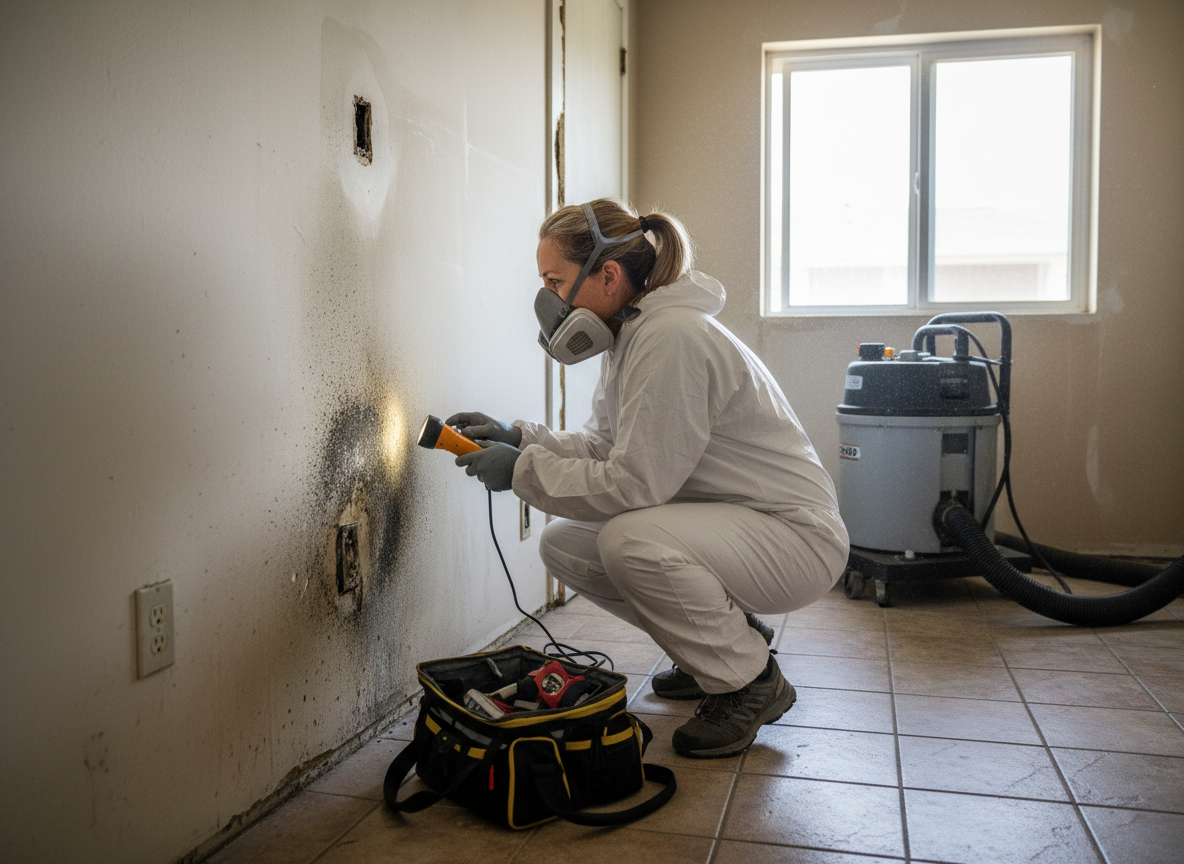
Solana Beach homes in neighborhoods like Lomas Santa Fe and Solana Highlands often feature older construction with wood framing and crawlspaces that trap moisture from the mild coastal Mediterranean climate. Ocean fog and salt air accelerate condensation on pipes and underfloor areas, creating hidden mold growth that standard visual checks miss. A proper inspection here requires moisture meters, thermal imaging, and air sampling focused on bathrooms, attics, and laundry rooms where ocean humidity lingers year-round.
San Diego County building codes emphasize ventilation in coastal zones, yet many Downtown Solana Beach properties built before updated standards have inadequate exhaust fans or single-pane windows that allow persistent dampness. Inspectors must check behind tile in showers and around window frames near the Solana Beach Coastal Rail Trail, where wind-driven moisture seeps in. Homeowners frequently overlook these edge cases until odors or stains appear, especially after seasonal marine layer periods.
Terrain near San Elijo Lagoon and Fletcher Cove Park contributes to higher groundwater influence in lower-lying lots, increasing basement and foundation moisture risks compared to inland San Diego areas. Inspections account for this by testing soil-adjacent walls and crawlspace vents that can pull in humid air. This local factor changes the job because salt-laden air corrodes metal components faster, requiring targeted sampling that generic methods skip.
Seasonal Guidance
Marine layer peaks from late spring through early fall raise indoor humidity levels across Encinitas and Del Mar borders, making pre-summer inspections critical for Solana Beach residents planning renovations. Winter rains, though light, combine with ocean winds to push water into stucco cracks common in Lomas Santa Fe homes.
Technician insight
In Solana Beach, the thing that catches most people out with Home mold inspection is how the constant ocean breeze and salt air push moisture into older stucco homes in Lomas Santa Fe even when windows stay closed. Homeowners often assume the mild Mediterranean climate prevents issues, but crawlspaces near the lagoon stay damp year-round and standard dehumidifiers can't keep up without proper ventilation checks.
Hidden Moisture in Solana Highlands Home
A homeowner in Solana Highlands noticed a musty smell after winter marine layers but no visible stains. Inspection revealed elevated moisture in the attic insulation from roof vents drawing in coastal humidity. We mapped the affected zones, collected samples confirming mold presence, and advised targeted ventilation upgrades to prevent recurrence.
How it works
- 1
Initial Consultation
Discuss visible signs, home history, and specific concerns like recent leaks near the address at 911 Lomas Santa Fe Dr.
- 2
On-Site Assessment
Use moisture detection tools and visual checks throughout living spaces, attics, and crawl areas affected by coastal air.
- 3
Sampling and Testing
Collect air and surface samples from high-risk zones tied to ocean humidity and send for lab analysis.
- 4
Report Delivery
Provide detailed findings with photos, moisture readings, and recommendations based on San Diego County conditions.
- 5
Follow-Up Options
Outline next steps if mold is confirmed, including remediation coordination available 24/7.
Pricing
Pricing varies by property size, access difficulty, and number of samples needed; upfront quotes provided after initial discussion.