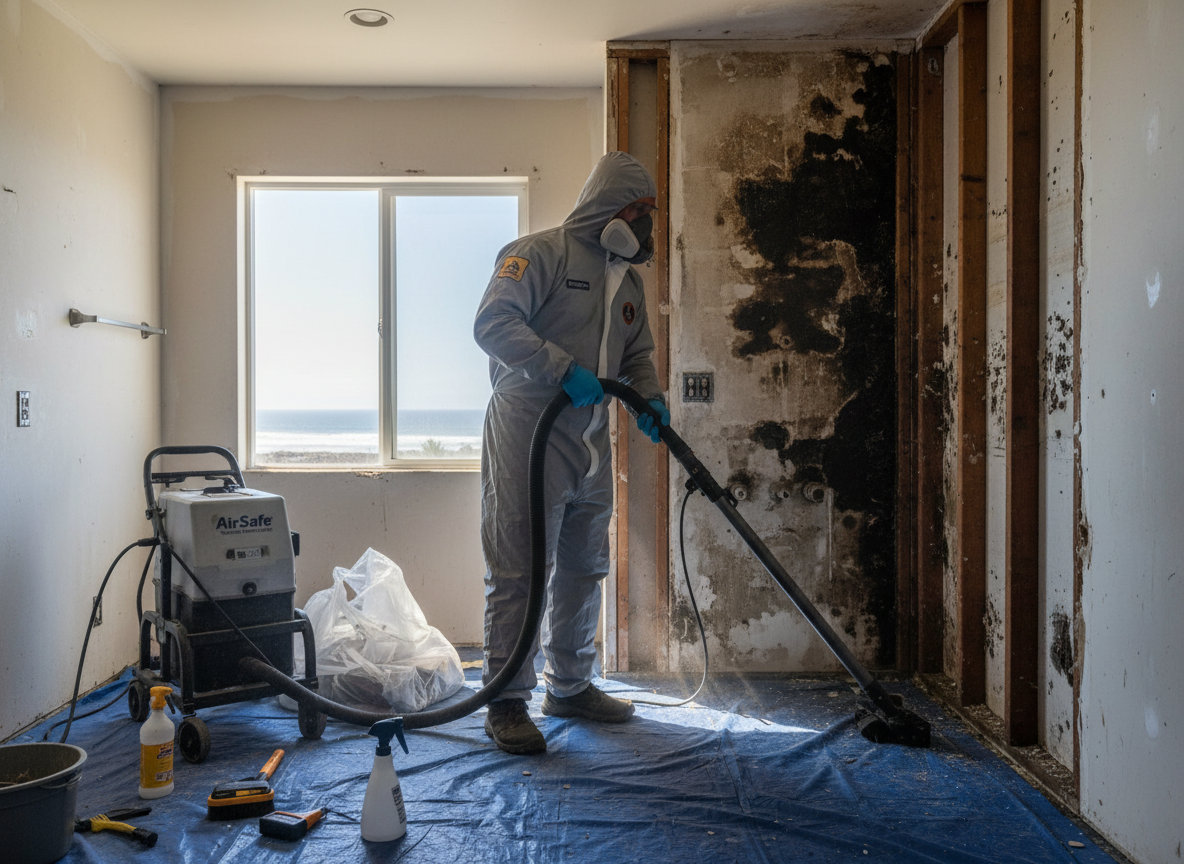
Solana Beach homes built decades ago in areas like Lomas Santa Fe and Solana Highlands often feature older wood framing and crawl spaces that trap moisture from the mild coastal Mediterranean climate. Ocean influence keeps relative humidity elevated year-round, allowing mold to take hold behind drywall or under flooring after minor leaks from irrigation or roof issues common near the San Elijo Lagoon. Our approach focuses on containment and source removal using HEPA filtration and antimicrobial treatments suited to these conditions rather than broad demolition that drives up costs for homeowners in Encinitas and Del Mar.
Affordable mold remediation here requires careful moisture mapping because the terrain slopes toward the coast, directing water toward foundations in Downtown Solana Beach properties. We inspect attics and wall cavities where condensation forms due to temperature swings between the rail trail corridor and inland spots. Removing affected materials in small sections while preserving structural elements keeps projects within reach for typical single-family residences without triggering full remodel expenses.
California building codes emphasize ventilation upgrades during remediation to prevent recurrence in high-humidity zones like those around Fletcher Cove Park. We integrate dehumidification units calibrated for San Diego County coastal air rather than generic units that fail in persistent ocean breezes. This targeted method addresses edge cases such as hidden growth in stucco exteriors common to Solana Beach without unnecessary removal of sound materials.
Homeowners often overlook how proximity to the lagoon increases airborne spores during certain wind patterns, requiring negative air pressure setups during work. Our process documents conditions with photos for insurance purposes common in the region while focusing on accessible fixes that avoid code violations in older stock.
Technician insight
In Solana Beach, the thing that catches most people out with affordable mold remediation is how the constant ocean breeze funnels extra moisture into crawl spaces of homes along Lomas Santa Fe Drive and near San Elijo Lagoon, turning small plumbing drips into widespread growth behind stucco that standard inland methods miss.
Crawl Space Growth Near Fletcher Cove
A Solana Highlands residence showed recurring musty odors after winter rains. Inspection revealed hidden mold on joists fed by lagoon humidity and poor grading directing water under the foundation. We contained the area, removed affected insulation in sections, treated surfaces, and added targeted drying without full floor removal. Clearance testing confirmed safe levels and the homeowner avoided larger renovation costs.
How it works
- 1
Initial Inspection
Assess visible and hidden moisture sources in crawl spaces and attics of Solana Beach homes using moisture meters suited to coastal humidity.
- 2
Containment Setup
Isolate affected zones with plastic barriers and negative air machines to prevent spore spread toward nearby areas like the Coastal Rail Trail.
- 3
Material Removal
Extract mold-damaged drywall or insulation in targeted sections while protecting intact framing typical in Lomas Santa Fe residences.
- 4
Cleaning and Treatment
Apply EPA-registered antimicrobials and HEPA vacuum surfaces before drying with equipment adjusted for ocean-influenced air.
- 5
Final Verification
Test air quality and moisture levels to confirm clearance before restoring access in neighborhoods from Carlsbad to Del Mar.
Pricing
Upfront quotes after inspection reflect home size, extent of hidden growth in older Solana Beach stock, and any need for targeted drying in humid coastal conditions.