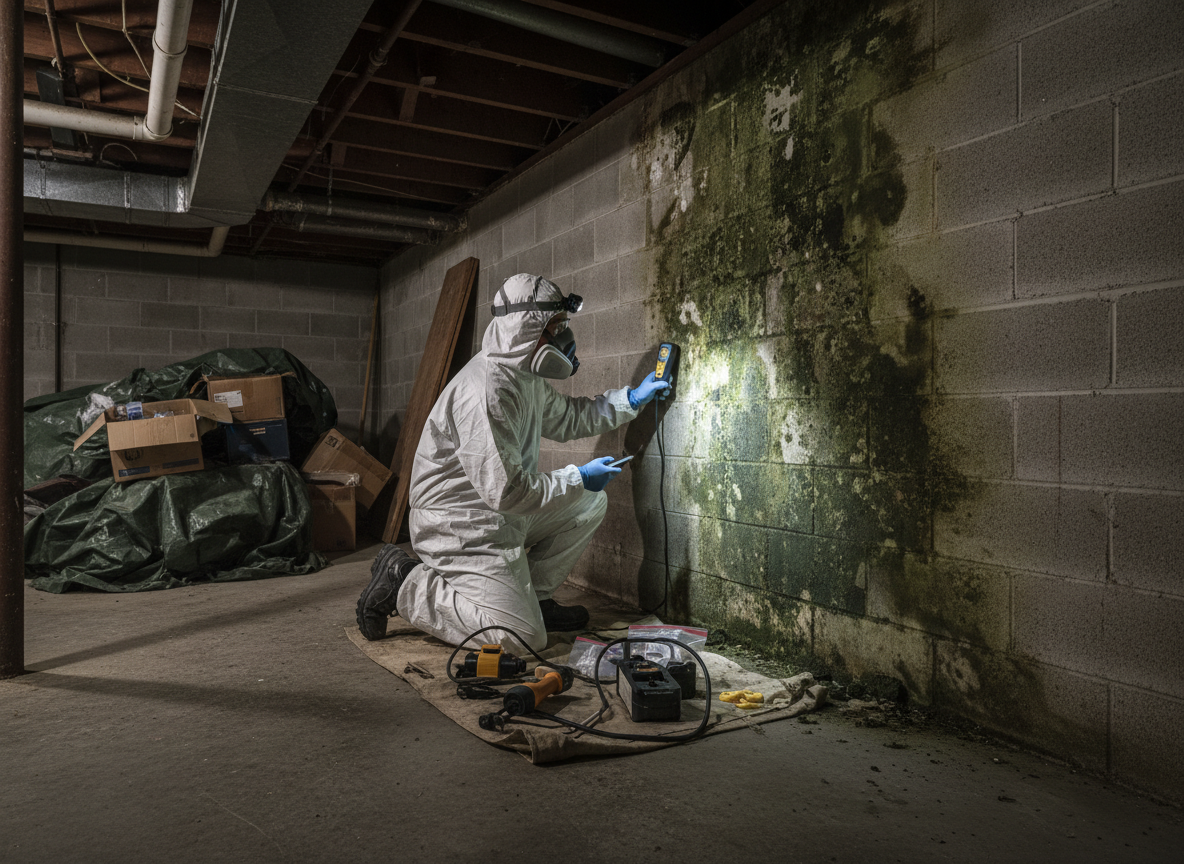
Homes in Lomas Santa Fe and Solana Highlands often feature below-grade spaces built into the coastal slope. The mild Mediterranean climate keeps temperatures moderate but allows persistent moisture from the ocean and nearby San Elijo Lagoon to migrate through foundations. During basement mold inspection we map humidity pathways created by the rail trail corridor and seasonal marine layer that keeps soil damp year-round.
We begin with visual assessment of concrete walls, sill plates, and HVAC returns common in Solana Beach stock from the 1960s onward. Moisture meters and thermal imaging locate hidden dampness behind drywall or under carpet without invasive cuts. Findings are documented with photos and written notes so owners in Downtown Solana Beach or nearby Encinitas can see exactly where water entered.
Local terrain near Fletcher Cove Park means some basements sit close to the water table. Salt air accelerates corrosion on metal components and promotes mold on organic materials left in storage. We note any code-related ventilation shortfalls that San Diego County inspectors typically flag during resale.
After the inspection we provide a clear written scope that separates inspection from any future remediation work. Homeowners receive recommendations tailored to the property’s age, proximity to the lagoon, and exposure to coastal fog that keeps relative humidity elevated even in winter.
Technician insight
In Solana Beach the thing that catches most people out with Basement mold inspection is the marine layer that keeps soil and foundations damp even when the house feels dry upstairs; older homes in Lomas Santa Fe near the lagoon often have hidden moisture behind finished walls that only shows up after we pull baseboards.
Hidden moisture behind finished wall in Solana Highlands
A homeowner in Solana Highlands called after noticing a musty smell following winter rains. We found elevated moisture along the north foundation wall adjacent to the lagoon drainage path. Thermal imaging revealed dampness behind drywall that had been installed over the original concrete. We documented the source and supplied a targeted scope that allowed the owner to address the leak before growth spread.
How it works
- 1
Site Walk and History Review
Walk every accessible basement area while noting past leaks, renovations, and proximity to the lagoon or rail trail.
- 2
Moisture and Humidity Mapping
Use meters and thermal cameras to record readings on walls, floors, and HVAC components throughout the space.
- 3
Air and Surface Sampling
Collect samples only where visual or meter evidence suggests active growth, then send to an independent lab.
- 4
Written Findings and Scope
Deliver a report with photos, moisture data, and next-step recommendations specific to the property’s location in Solana Beach.
Pricing
Inspection pricing depends on square footage, number of samples, and whether the basement is finished or has multiple access points.