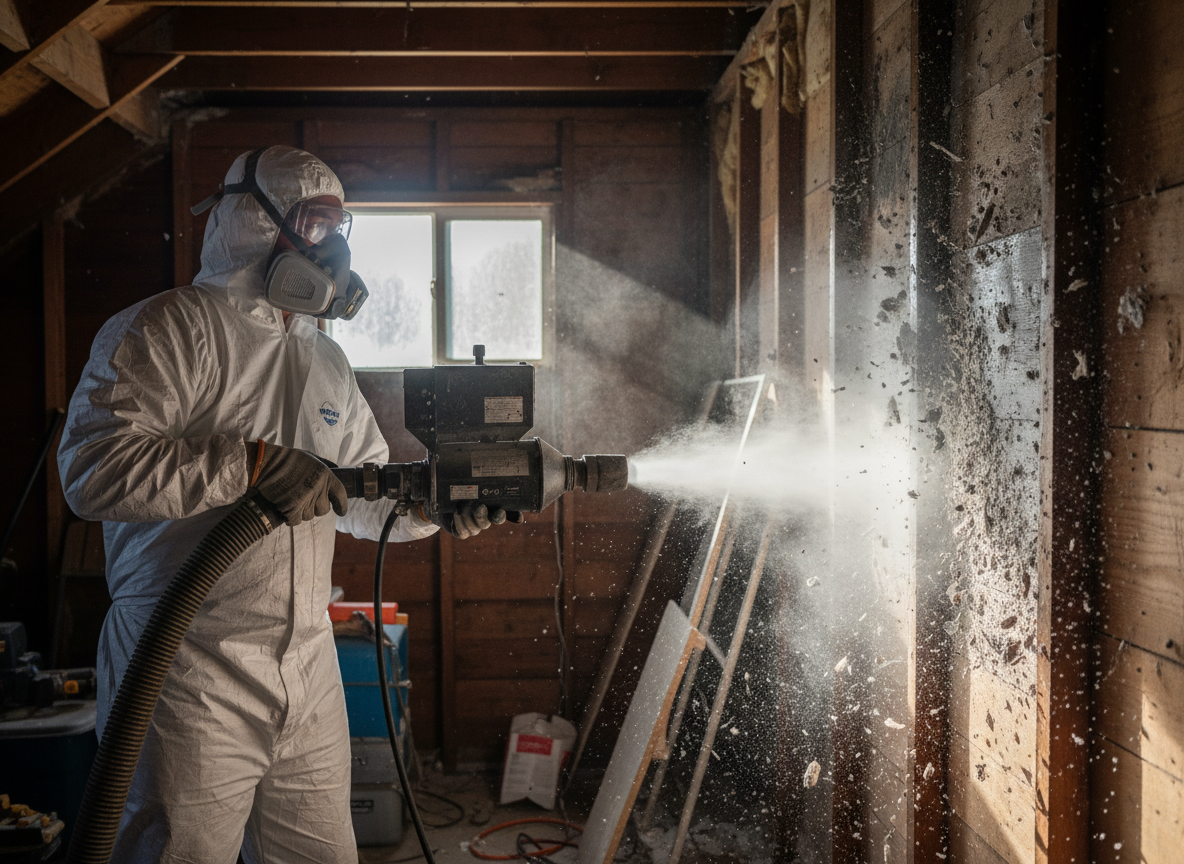
Dry ice blasting removes mold from wood framing, stucco, and concrete without water or harsh chemicals, which matters in Solana Beach where ocean air keeps humidity elevated year-round. The process shoots pellets that sublimate on contact, lifting growth while leaving surfaces dry enough to discourage immediate regrowth. Homes in Lomas Santa Fe and Solana Highlands often feature older redwood or plaster interiors that can trap spores behind layers; blasting reaches those voids without the sanding damage that spreads spores into nearby rooms.
San Diego County building codes require containment and HEPA filtration during any mold work, and dry ice blasting fits because it generates minimal dust. Crews set up negative air machines drawing from the San Elijo Lagoon side where salt air accelerates corrosion on metal vents. In Downtown Solana Beach properties close to the Coastal Rail Trail, tight lots mean equipment must fit through side yards without disturbing neighbors, so portable blasting units are standard. The mild winters mean jobs run year-round instead of stopping for rain.
Technicians monitor surface temperatures because coastal fog can leave residual moisture that interferes with pellet impact. After blasting, surfaces receive a borate treatment to address any remaining roots in porous materials common in Encinitas-adjacent homes. This method avoids the moisture load that liquid antimicrobials add, which is key when working near the ocean where drying times stretch longer than inland San Diego areas.
Technician insight
In Solana Beach, the thing that catches most people out with dry ice blasting mold is how the constant ocean breeze keeps salt and moisture moving through older crawlspaces in Lomas Santa Fe homes, so you have to treat the entire perimeter or the growth just returns from the San Elijo side.
Hidden Mold Behind Stucco in Solana Highlands
A homeowner noticed musty odors after winter rains near Fletcher Cove Park. Inspection found mold behind exterior stucco where coastal fog had seeped in. Dry ice blasting cleared the growth from framing without damaging the plaster, followed by borate treatment and ventilation adjustments. The odor disappeared and no further moisture issues appeared.
How it works
- 1
Initial Assessment
Technician inspects affected areas in the home, identifies mold extent, and confirms dry ice blasting is suitable for the materials present.
- 2
Containment Setup
Plastic barriers and negative air machines isolate the work zone to prevent spore spread into living spaces.
- 3
Blasting Application
Dry ice pellets are applied at controlled pressure to remove mold from surfaces without abrasion or added moisture.
- 4
Post-Treatment and Clearance
Surfaces receive preventive treatment, air is filtered, and final inspection confirms removal before barriers come down.
Pricing
Cost depends on square footage, access difficulty, and whether hidden growth behind walls is discovered; upfront quotes provided after inspection.