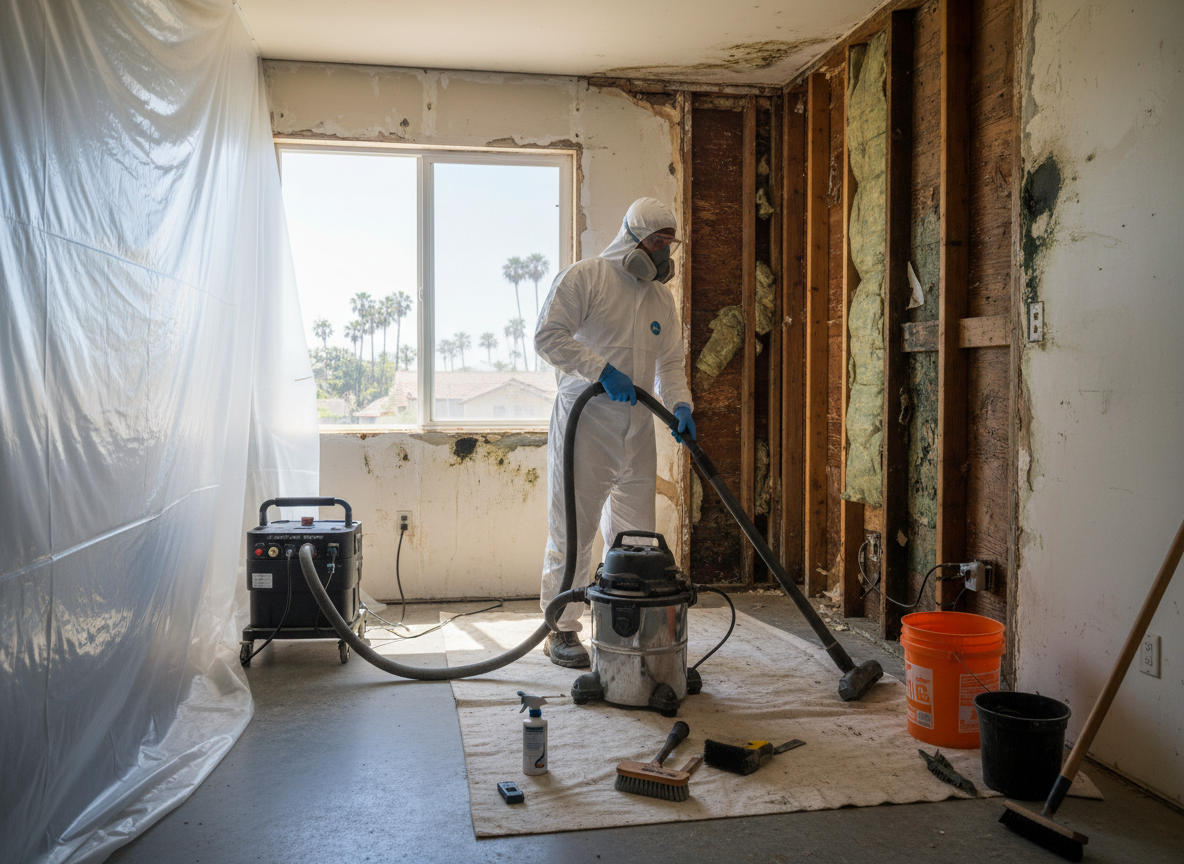
Solana Beach homes built before the 1990s in neighborhoods like Solana Highlands and Lomas Santa Fe often feature older stucco and wood framing that traps moisture from the mild coastal Mediterranean climate. Ocean air keeps relative humidity elevated year-round, allowing mold to grow behind baseboards and in crawl spaces even without obvious leaks. Abatement crews must remove affected drywall sections while containing spores to prevent spread into adjacent rooms connected to the Solana Beach Coastal Rail Trail corridor.
San Elijo Lagoon and nearby beaches such as Fletcher Cove Park contribute salt-laden air that accelerates corrosion on metal HVAC components and window frames. This creates hidden condensation points in attics and wall cavities of single-story ranch homes common in Downtown Solana Beach. Proper abatement requires negative air machines and HEPA filtration to capture spores before they migrate to neighboring properties in Encinitas or Del Mar.
When water intrusion occurs from winter storms or irrigation overspray, mold can colonize insulation within 48 hours under the persistent ocean influence. Technicians inspect for elevated moisture readings in subflooring and remove porous materials that cannot be salvaged. Containment barriers are erected room-by-room to isolate work zones, especially in homes near Carlsbad where similar coastal conditions exist.
Final clearance testing confirms spore counts return to outdoor baseline levels before reconstruction. This step is critical in multi-level homes where HVAC ducts can redistribute spores across floors if not properly cleaned during abatement.
Technician insight
In Solana Beach the thing that catches most people out with mold abatement is how the constant ocean breeze keeps humidity high enough that even small roof leaks in Lomas Santa Fe homes grow into wall-cavity colonies before homeowners notice musty smells near the San Elijo Lagoon side of town.
Hidden growth behind stucco in Solana Highlands
A homeowner noticed a persistent odor near the laundry room after heavy winter rain. Inspection revealed elevated moisture behind exterior stucco where ocean air had driven condensation into older insulation. Crews contained the room, removed the affected materials, treated framing and ran dehumidifiers until readings normalized. Clearance samples confirmed safe levels and the space was ready for new drywall within four days.
How it works
- 1
Initial Inspection
Technician performs moisture mapping and visual assessment in affected rooms, noting construction type and proximity to coastal air sources.
- 2
Containment Setup
Plastic barriers and negative air machines isolate the work area to prevent spore migration into unaffected living spaces.
- 3
Material Removal
Non-salvageable drywall, insulation and baseboards are cut out and bagged for disposal while HEPA vacuums capture airborne particles.
- 4
Surface Treatment
Remaining surfaces receive antimicrobial application followed by drying with dehumidifiers to eliminate residual moisture.
- 5
Clearance Testing
Air and surface samples are collected and analyzed to verify mold levels match outdoor baselines before barriers are removed.
Pricing
Upfront quotes provided after inspection; final cost depends on square footage affected, accessibility and whether HVAC cleaning is required.