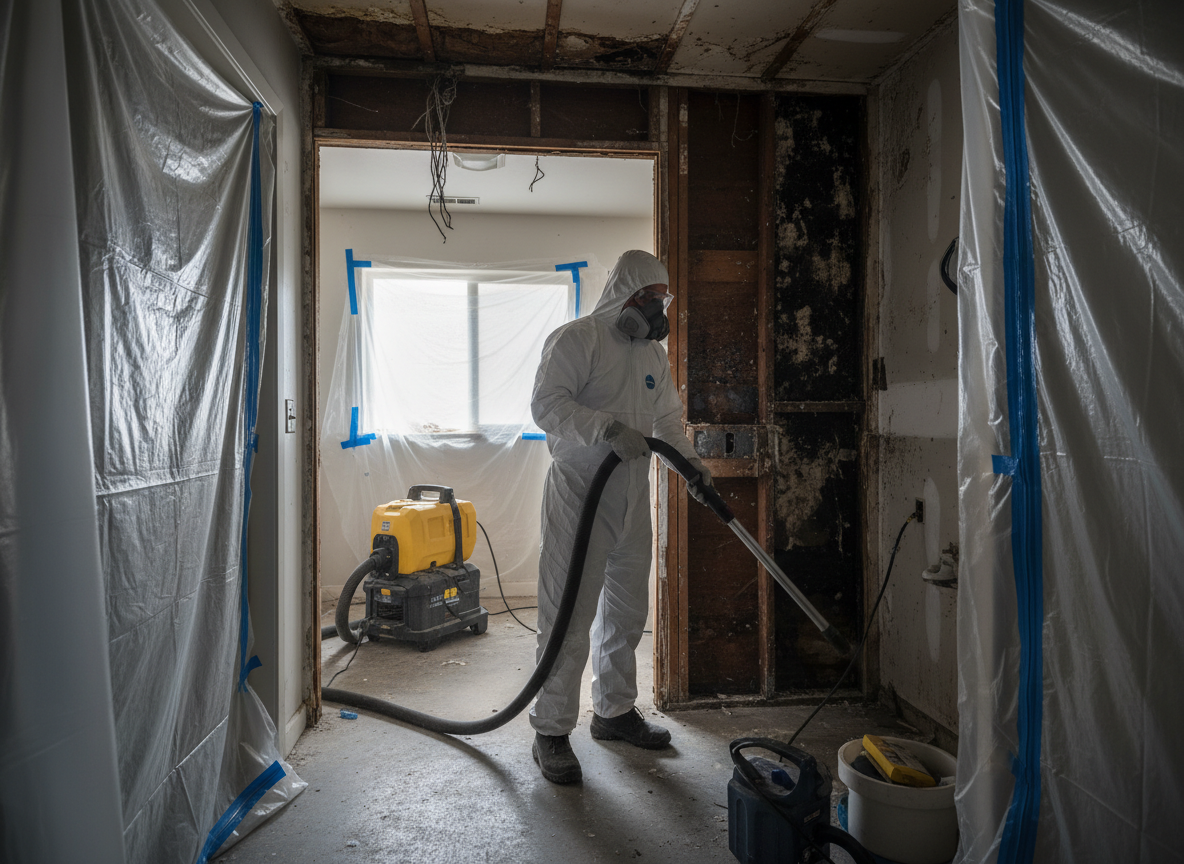
Solana Beach homes built before the 1990s in Lomas Santa Fe and Solana Highlands often contain original drywall and plaster that wick moisture from the mild Mediterranean climate. Ocean fog and salt air keep relative humidity elevated year-round, allowing mold to establish behind baseboards and in attic insulation near the San Elijo Lagoon. Technicians must account for this persistent vapor drive when planning containment, because standard plastic barriers alone fail when coastal winds push humid air through small gaps.
Properties along the Solana Beach Coastal Rail Trail and near Fletcher Cove Park sit on slightly elevated coastal terraces where storm runoff can pool against foundations. This creates chronic dampness in crawl spaces that homeowners rarely inspect. Professional mold removal here requires negative-air machines rated for the square footage plus targeted antimicrobial application on joists that standard bleach treatments cannot penetrate without damaging the wood.
San Diego County building codes require proper disposal of contaminated materials when visible mold exceeds ten square feet. Crews working in Del Mar and Carlsbad border homes follow the same protocols to avoid cross-contamination during transport. Every job ends with post-remediation air sampling to confirm spore counts have returned to outdoor baseline levels typical for this coastal zone.
Technician insight
In Solana Beach the thing that catches most people out with professional mold removal is how the constant ocean influence keeps crawl spaces under 1960s and 1970s homes in Lomas Santa Fe damp even in summer; homeowners seal vents thinking it helps, but that traps the humidity that feeds mold on the underside of the subfloor.
Hidden Growth Behind Shower in Solana Highlands
A homeowner near Lomas Santa Fe Drive noticed musty odor after winter rains. Inspection revealed water had wicked behind the shower surround into the original drywall and reached the exterior wall sheathing. We removed the affected sections, treated the framing, and installed a moisture barrier before new drywall was hung; follow-up testing showed spore levels matched outdoor readings.
How it works
- 1
Initial Assessment
Technician inspects affected rooms, attics, and crawl spaces using moisture meters and borescopes while documenting visible growth and hidden moisture pockets common in Solana Beach construction.
- 2
Containment Setup
Plastic sheeting and negative-air machines isolate the work zone to prevent spores from migrating into living areas or HVAC systems.
- 3
Removal and Cleaning
Contaminated drywall, insulation, and trim are removed, followed by HEPA vacuuming and antimicrobial treatment of exposed framing.
- 4
Drying and Verification
Industrial dehumidifiers and air movers reduce moisture; clearance testing confirms the space meets outdoor spore baselines before reconstruction.
Pricing
Cost depends on square footage affected, accessibility of crawl spaces or attics, and whether HVAC cleaning is required.