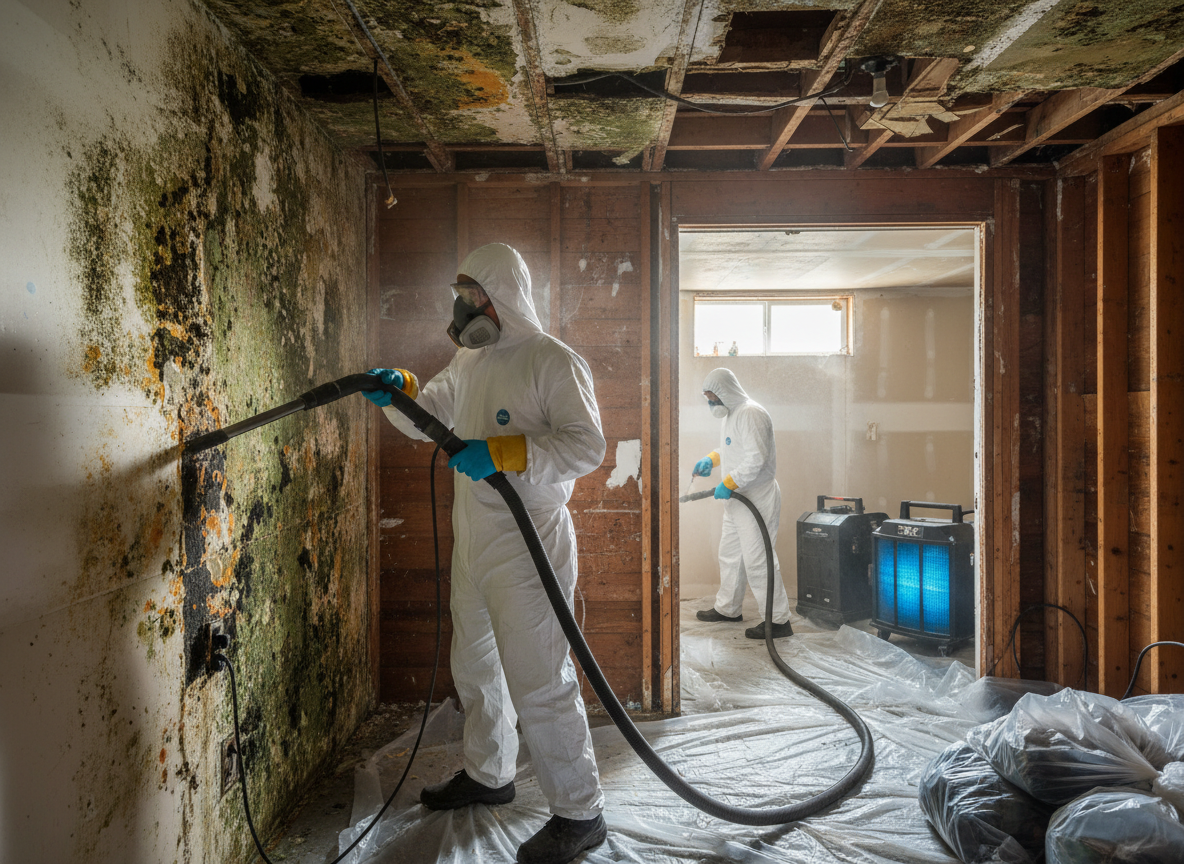
Toxic mold removal in Solana Beach often starts with containment because the mild coastal Mediterranean climate keeps relative humidity elevated year-round, especially in neighborhoods like Lomas Santa Fe and Solana Highlands. Older single-story homes common along Lomas Santa Fe Drive frequently have stucco exteriors and slab foundations that trap moisture from fog and winter rains. Technicians isolate affected zones with negative air machines before cutting into drywall or subfloors to reach colonies that have spread behind baseboards or into HVAC returns. Without proper containment, spores easily migrate to adjacent rooms or even neighboring units in denser Downtown Solana Beach blocks.
Removal protocols emphasize source elimination rather than surface cleaning alone. In properties near San Elijo Lagoon or the Solana Beach Coastal Rail Trail, groundwater seepage and poor grading around foundations create recurring wetting events that feed Stachybotrys and other toxigenic species. Crews remove saturated insulation, treat framing with EPA-registered antimicrobials, and use moisture meters to confirm drying before any reconstruction. Edge cases include mold that has colonized behind built-in cabinetry or in crawl spaces under homes built on the slight slopes common in Solana Highlands, where airflow is limited and detection requires borescopes.
Post-remediation verification includes air and surface sampling interpreted against San Diego County guidelines, followed by written clearance reports. Homeowners in Encinitas, Del Mar, and Carlsbad often request the same protocol when their properties share the same coastal exposure. The 24/7 response from the base at 911 Lomas Santa Fe Dr allows crews to begin containment before daytime temperature swings drive additional condensation inside wall cavities. Final steps focus on restoring airflow without reintroducing moisture, using dehumidification sized for the square footage and layout of each specific residence.
Technician insight
In Solana Beach, the thing that catches most people out with toxic mold removal is how the constant ocean influence keeps interior humidity above 60 percent even during dry months, especially in 1970s and 1980s homes around Lomas Santa Fe Drive where original weep screeds have clogged and moisture sits inside wall cavities for years.
Hidden Growth Behind Kitchen Cabinets
A Solana Highlands homeowner noticed a musty smell after heavy winter fog. Inspection revealed water had wicked up from the slab into particleboard cabinets and drywall. Crews contained the kitchen, removed the saturated materials, treated the framing, and dried the cavity over three days before clearance sampling allowed reinstallation.
How it works
- 1
Initial Assessment
Technicians arrive within hours, inspect accessible areas with moisture meters and borescopes, and document visible growth plus hidden moisture pockets typical in Solana Beach stucco homes.
- 2
Containment Setup
Negative air machines and plastic barriers isolate the work zone to prevent spore spread into unaffected rooms or nearby properties along the Coastal Rail Trail corridor.
- 3
Removal and Cleaning
Affected materials are removed, surfaces treated, and cavities dried using equipment calibrated for the persistent ocean humidity found in Lomas Santa Fe and Solana Highlands.
- 4
Verification and Clearance
Independent sampling confirms remediation success before any reconstruction, with reports provided for homes near Fletcher Cove Park or San Elijo Lagoon.
Pricing
Cost depends on the square footage affected, accessibility behind stucco or slab construction, and whether HVAC systems require separate cleaning.