2026-10-22 ·
How Local Climate Affects Mold In Solana Beach Kitchens And Bathrooms
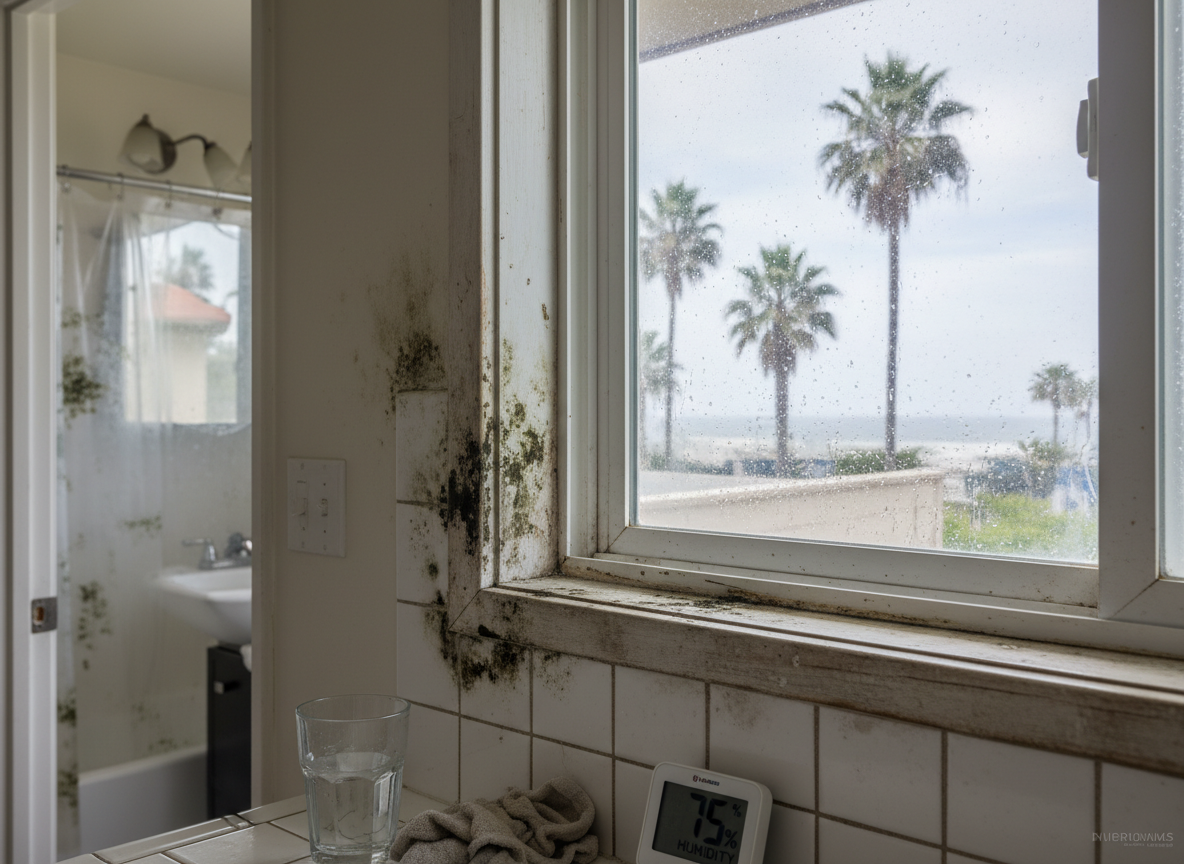
Solana Beach's mild coastal Mediterranean climate with ocean influence keeps relative humidity above 60 percent for much of the year, causing visible mold to appear in kitchens and bathrooms within 48 to 72 hours after moisture exposure rather than the 5 to 7 days common inland.
Ocean-Driven Humidity Patterns Near the Coast
Homes in Downtown Solana Beach and Lomas Santa Fe sit within a few blocks of the shoreline where salt-laden air holds extra moisture. Kitchens with gas ranges and dishwashers release steam that mixes with this already humid air, allowing colonies to form on cabinet undersides and behind appliances. Bathrooms in single-story ranch homes built in the 1960s and 1970s often lack adequate exhaust fans, so shower vapor lingers and condenses on tile grout and ceiling drywall. The same pattern shows up in Solana Highlands where newer builds still face the same ocean breeze that prevents indoor air from drying out quickly after use. Residents along the Solana Beach Coastal Rail Trail report musty odors returning within weeks if fans are not run for at least 20 minutes after every shower.
Kitchen and Bathroom Moisture Sources Amplified Locally
Daily cooking and bathing add 1 to 2 gallons of water vapor inside typical Solana Beach homes. When that vapor meets the steady 65 to 75 degree temperatures maintained by ocean moderation, surfaces stay damp long enough for spores to germinate on porous materials like drywall and wood trim. Homes near San Elijo Lagoon experience extra ground-level dampness that migrates through slab foundations into ground-floor bathrooms, raising the risk of hidden growth under vanities. Older properties in Lomas Santa Fe often have single-pane windows that sweat during cooler mornings, dripping onto countertops and cabinet faces. These conditions differ from inland San Diego neighborhoods where drier air evaporates the same moisture load before mold can establish.
Seasonal and Terrain Effects on Local Homes
Winter storms push extra rain into the region and raise lagoon-adjacent water tables, increasing crawl-space humidity that travels upward into first-floor bathrooms in neighborhoods such as Solana Highlands. Summer marine layers keep overnight humidity elevated even when daytime temperatures reach the mid-70s, so kitchens with south-facing windows never fully dry between meals. The flat coastal plain limits natural airflow in many blocks, trapping moisture around homes built close together near Fletcher Cove Park. These terrain realities mean mold remediation projects in Solana Beach frequently involve removing baseboards and checking subflooring in addition to surface cleaning.
Practical Steps for Solana Beach Homeowners
Run bathroom exhaust fans on a timer set for 25 minutes after showers and open a window when weather permits to pull in drier air from the coast. Wipe down kitchen counters and sink areas within 10 minutes of meal prep to remove standing water before it evaporates into the humid indoor air. Schedule a mold inspection near me after any plumbing leak or heavy rain event, especially for properties within a half-mile of San Elijo Lagoon. Homeowners in Encinitas and Del Mar facing similar conditions have found that improving ventilation reduces recurrence rates more effectively than repeated surface treatments alone. Review the article Post-Storm Mold Checks For Homes Near San Elijo Lagoon for targeted inspection points after winter rains.