2026-10-22 ·
Inspecting For Hidden Mold Near Fletcher Cove
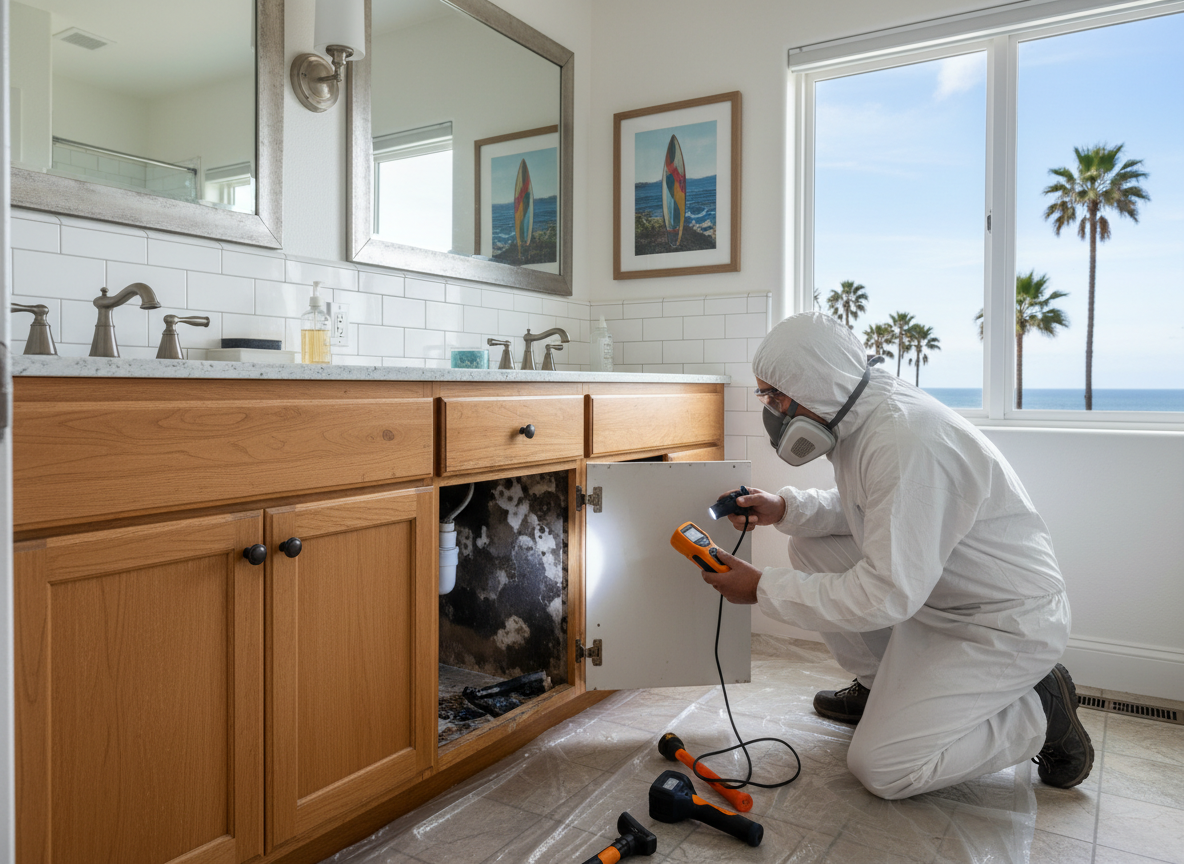
Inspecting for hidden mold near Fletcher Cove starts with checking crawl spaces and wall cavities where ocean-influenced humidity meets older Solana Beach construction in neighborhoods like Lomas Santa Fe and Solana Highlands. The mild coastal Mediterranean climate keeps temperatures moderate year-round but allows persistent moisture from marine layers and fog to infiltrate homes built on the coastal bluff near Fletcher Cove Park and the Solana Beach Coastal Rail Trail.
Climate and Terrain Effects on Mold Growth
The San Diego County coastline around Solana Beach creates steady humidity that lingers in homes close to San Elijo Lagoon and the rail trail. Marine air moves inland through Downtown Solana Beach and settles in lower levels, especially where grading directs runoff toward foundations. Homes in Solana Highlands often sit on slopes that channel evening moisture into basements and underfloor areas. This pattern differs from inland San Diego spots because salt air accelerates condensation on cooler surfaces like pipes and ductwork. Residents in nearby Encinitas and Del Mar notice similar issues after periods of dense fog that the ocean breeze fails to clear quickly. Checking these spots after any roof leak or plumbing drip prevents small colonies from expanding behind drywall.
Common Hidden Locations in Local Homes
Crawl spaces under 1960s and 1970s homes near Fletcher Cove Park frequently trap moisture from the ground and poor ventilation. Attics in Lomas Santa Fe properties collect condensation where insulation meets roof sheathing cooled by ocean air. Bathroom walls adjacent to showers develop hidden growth when exhaust fans vent into attics rather than outside. Kitchens in Solana Beach homes built before updated building codes often lack proper vapor barriers behind tile, allowing steam to reach framing. The Solana Beach Coastal Rail Trail corridor experiences extra wind-driven rain that finds gaps in older stucco, pushing water into exterior walls. These locations require moisture meters and borescopes because surface stains rarely show the full extent.
Step-by-Step Inspection Approach
Begin at the exterior and note grading around the foundation near Fletcher Cove Park, ensuring soil slopes away from the house. Move inside and use a moisture meter on baseboards in rooms closest to the ocean. Lift attic insulation in sections to inspect sheathing for dark discoloration or musty odors. In crawl spaces, scan joists and subfloor with a flashlight while checking for standing water or efflorescence on concrete. Test air returns and supply ducts for elevated humidity levels. Document every reading with photos and notes so patterns become clear. This methodical walk-through identifies the source before any removal work begins.
When Professional Testing Adds Value
Homeowners who find recurring musty smells after checking visible areas benefit from home mold inspection that includes air and surface sampling. The same holds true when planning renovations near San Elijo Lagoon, where storm events can push additional moisture into structures. How local climate affects mold in Solana Beach kitchens and bathrooms explains seasonal humidity spikes that inspections should target. Post-storm mold checks for homes near San Elijo Lagoon detail timing for follow-up visits after heavy rain. Mold inspection near me services cover Carlsbad and Del Mar properties with similar coastal exposure.